Content
Product and editorial information is maintained as structured content in Sanity.
Project / 02
A content-driven digital catalog for an artisan home collection brand.
A production-oriented catalog built with Next.js and Sanity, separating the product experience from structured content management.
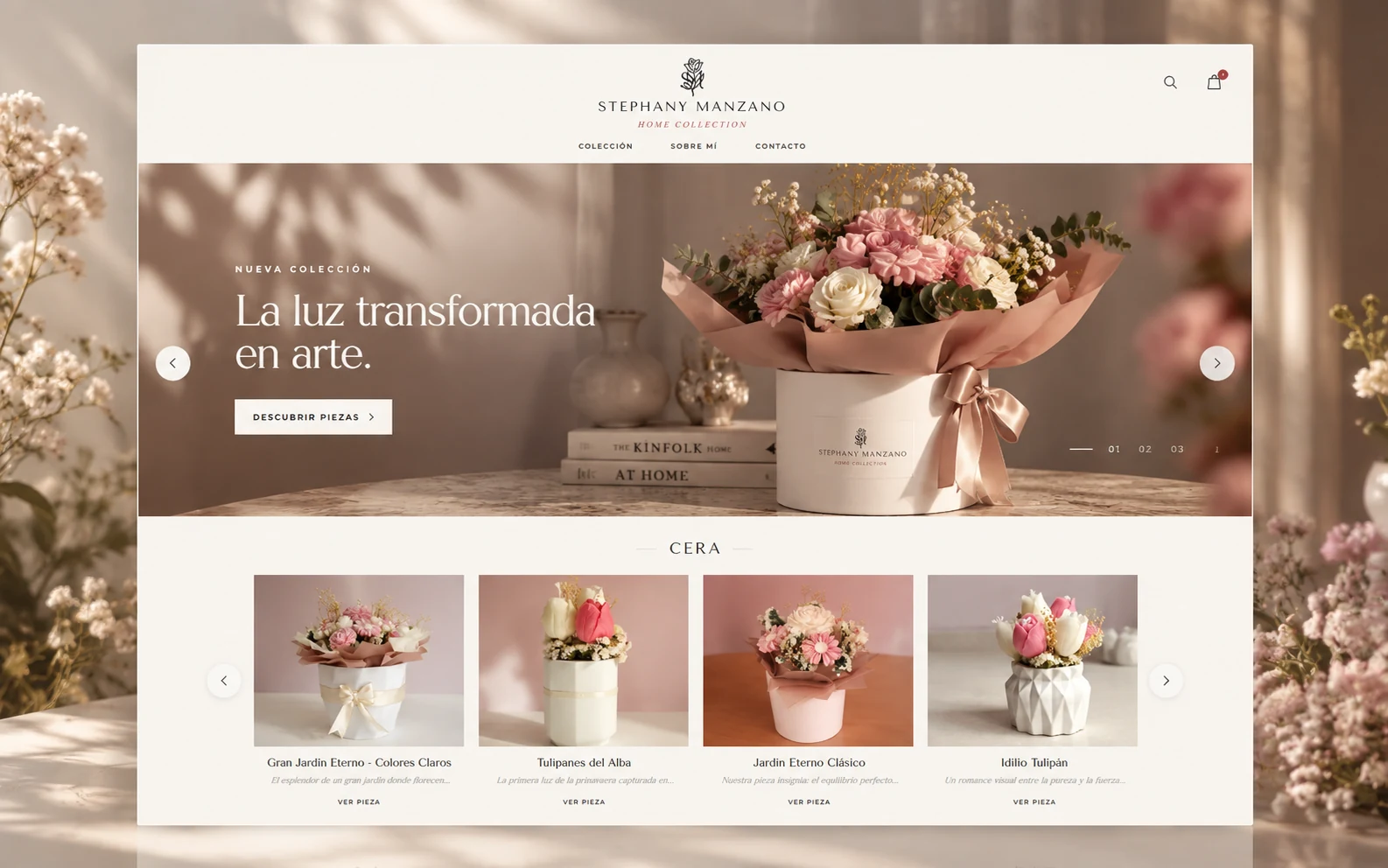
Project system
SMHC
Status
Completed
Domains
04
Knowledge Nodes
09
Cross-domain
04
01 / System Context
Stephany Manzano Home Collection is a digital catalog created for an artisan home collection brand. The project needed to present products through a refined visual experience while allowing catalog and editorial content to evolve independently from the application code.
Problem
The brand needed a maintainable digital catalog where product and editorial content could evolve without coupling every content change to application code.
02 / Architecture
The system uses Next.js as the presentation layer and Sanity as a headless content source. Structured content, portable editorial data and managed imagery flow from the CMS into a responsive product-oriented interface.
03 / Runtime Flow
Product and editorial information is maintained as structured content in Sanity.
Sanity schemas define the structure of catalog and editorial records.
The application retrieves the content required by each catalog experience.
Next.js composes content and application structure into the public-facing site.
Sanity image tooling provides the product imagery consumed by the interface.
The final interface presents brand, editorial and product content as one cohesive experience.
04 / Decisions
Using a headless CMS allows catalog content to change without requiring every editorial update to become an application-code change.
Products and editorial sections benefit from explicit content models instead of being embedded directly inside React components.
The application layer focuses on presentation, navigation and product experience while Sanity remains responsible for content management.
The interface uses restrained typography, imagery and spacing so the product photography remains the primary visual signal.
05 / Knowledge Evidence
Engineering Domains
Validated Knowledge Nodes
0906 / Quality
The project uses a typed Next.js application structure with dedicated content tooling and a production-oriented separation between interface and CMS responsibilities.
Framework
Next.js 16
Frontend
React 19
CMS
Sanity
Styling
Tailwind 4
TypeScript application code
Headless CMS architecture
Portable Text rendering
Managed image pipeline through Sanity tooling
Responsive product presentation
Motion-based interface refinement
07 / Outcome
The result is a production catalog where the brand experience and the content-management system remain intentionally separated: product and editorial information can evolve through Sanity while the Next.js application remains focused on presentation and interaction.